Nath promises overhaul of road & highway sector
May 30, 2009
In what could be seen as strong indications of an overhaul in the working of road transport and highway sector, new minister Kamal Nath on Friday made it clear that he would go for wholesome changes in the ministry to put road construction back in top gear.
After taking charge of the ministry, Nath said his focus would be on implementation of projects on the ground rather than making big plans — a clear indication that the sector will get a major boost.
“Sadkon ko napi jaati hai, plans ko nahin (roads are measured and not the plans). Lot of thought has been given to planning in the past two years. Now we have to deliver. Performance is evaluated on the basis of kilometres of roads that are built. Now our agenda is of change. The system has to be overhauled so that work on the ground happens. Planning has to be delivered on roads,” he told reporters.
Nath, who was shifted from commerce and industry to road transport and highways, said he was “excited” about his new portfolio. He said he was looking forward to a challenge and he had got one.
On highway projects under public private partnership (PPP) model finding lukewarm response from private developers, the minister said, “Models which are not working have to be done away with and we need to adopt models which can attract investors. Moreover, just awarding the work is not just enough. We have to ensure progress is made on the ground.”
Spelling out his approach to bring the key infrastructure sector back on track, the minister said he was looking at structural changes in the system and procedures to make it result oriented. “Some of the old regulatory frameworks relating to transportation like multiple permit and Motor Vehicles Act have to be looked at from new perspectives. Old laws have to be amended,” he said.
Ministers of state Mahadev Khandela and R P N Singh also assumed charge on Friday.
Source: timesofindia.indiatimes.com
Nath promises action on roads
May 30, 2009
Once the high-profile commerce minister making India’s voice heard at global trade fora, Kamal Nath is now tasked with putting the country’s teetering highway projects on track. The surface transport ministry had drawn criticism for slippage in project implementation and delay in awarding contracts , but the new minister says actions will speak for themselves . Excerpts from an interview:
What will be the key focus areas of the new government?
In the past, there has been enough planning. Now thoughts have to be transformed into action. We have to ensure that the system and platforms are workable. Performance has to be measured not in terms of plans, but actual work. Things have to be looked at in a new way. In a few weeks, a new model will be found so that India can build the highest number of road kilometres. We have to see that all the outlays are utilised. A successful plan is that which is converted into action.
There have been talks of roads as a stimulus to the economy…
The greater the outlay on construction of roads, the greater the impetus to the economy. If you look at the development of countries like China, Japan and those in Europe, it is all based on their roads and other major infrastructure. There could be better airports but without good roads it doesn’t help much. Along with highways, rural roads too have to be given proper attention.
Earlier, there were delays on the part of the government… but a big hurdle was the paucity of cash owing to the impacts of the financial slowdown, which too delayed project implementation…
We will meet all the states in a month’s time to remove the bottlenecks . Some old regulatory frameworks on transportation such as multiple permit and others have to be reviewed . We are looking at new models . We will look at new ways of capital inflow.
Source: economictimes.com
Govt needs to overhaul road infra regulations – Kamal Nath
May 30, 2009
India needs to rework its regulatory policy framework for road infrastructure, the new transport minister said on Friday, as the government looks at the sector to boost growth in a flagging economy. “Old regulatory framework needs to be looked in a new way,” Transport Minister Kamal Nath told a news conference.
India’s economy slowed to a six-year low of 6.7 percent in the year to March 2009, and many expect it to slow further to 6 percent in the current fiscal year, compared with 9 percent or more in the recent past.
Source: in.reuters.com
Old framework for transportation sector to be modernised: Nath
May 30, 2009
The “old regulatory framework” relating to the transportation sector will be modernised to make it “practical”, Minister for Roads Transport and Highways Kamal Nath said today.
“Some of the very old regulatory frameworks we have relating to transportation like multiple permit and others have to be looked at (anew)… We are looking at new models,” Nath told reporters here while taking charge of the Ministry.
He also said that the outlay for constructing roads and highways has to be utilised and the programmes and mechanisms for road development have to be made workable and practical.
Nath, who was Minister for Commerce and Industry in the previous Government, said he will work towards meeting the challenge of providing stimulus to the economy through developing roads and highways.
“With the current global recession and the (slowdown) in the country, it is important that this (development of roads and highways) provides economic stimulus, this provides jobs and this is going to the biggest challenge,” he said.
His ministry will also look at the impediments in implementing plans for infrastructure development in the country, Nath said.
Source: business-standard.com
Bid to widen highway begins
August 4, 2008
Ranchi, Aug. 1: National Highways Authority of India (NHAI) has set the ball rolling for the four-laning of Hazaribagh-Ranchi stretch of NH-33, considered to be the lifeline of Jharkhand.
NHAI, which functions under the Union ministry of road transport and highways, has invited a global expression of interest (called request for qualification in technical parlance) from construction majors. The last date to respond is August 29.
“It would be a 75km stretch of NH-33 costing around Rs 600 crore. The tenders would be on build, operate, transfer (BOT) annuity basis,” said H.C. Arora, the chief general manager of NHAI, who looks after projects in Uttar Pradesh, Uttarakhand, Bengal, Bihar, Jharkhand and Delhi.
This would be the third time that NHAI has invited tenders for the same stretch.
Earlier, two efforts to finalise the project through BOT-toll basis proved futile with no parties responding to pre-qualification bids apparently due to Naxalism and law and order problems in the state. Under BOT-toll, the contractors awarded works are supposed to invest the entire project cost and realise the same by collecting toll taxes for the next 30 years or so.
Under the annuity basis, although the construction company would invest the entire project cost, a fixed annual sum as annuity from the government would ensure that the former gets back its invested money.
In a related development, the ministry is contemplating to turn the 150-km stretch of NH-33 between Ranchi and Jamshedpur into a single package. Earlier, the stretch was divided into two packages — one between Ranchi and Rargaon and the other between Rargaon and Mohulia.
Arora added that the NHAI would soon invite expressions of interest for the Ranchi-Jamshedpur stretch, too.
The ministry was in favour of inviting the tenders on BOT-toll basis. The overall cost of the project would be around Rs 1,300-1,400 crore.
The proposed Hazaribagh-Ranchi four-lane road would end near Vikas Vidyalaya by taking a bypass of about 20km before meeting Ranchi-Jamshedpur highway near Rampur.
The state and central authorities are discussing whether the proposed Ring Road project for Ranchi can be merged with the highways’ proposed bypass on a cost-sharing basis. Arora added that the four-laning project of both the stretches would be part of National Highway Development Programme-Phase III.
Source: telegraphindia.com
Gammon India Ltd sees FY09 topline at Rs 3K cr
August 2, 2008
Gammon India has declared its results for the quarter ended June 2008 (Q1). The company’s standalone net sales were at Rs 585.24 crore versus Rs 540.31 crore.
 Parvez Umrigar , MD, Gammon Infrastructure Projects said that Gammon India Limited, the contracting arm of the company will book a topline turnover of Rs 3,000 crore for the current year. He added that Gammon Infrastructure, the development arm is more of a value based play and they have capital investment plans of around Rs 7,500 crore scattered over the next few years.
Excerpts from CNBC-TV18’s exclusive interview with Parvez Umrigar:
Q: Numbers look good, Operating profits margins stood at about 71%, the key concern right now is whether are not incremental orders are expected to slow down and more importantly for the current order book that you enjoy at Rs 9,500 crore is there an issue on execution?
A: The privatization space across the sectors continues to keep pace and infact the government has given us a choice that would like to promote more on a privatization model.
We have had some slow down in the road sector because the implementation under NHI new model agreement have had some issues raised by some developers and that once in a while you do change a model agreement so those things arise but otherwise if you see the action in BOT (Build, Operate, Transfer) space for example the government just announced the qualifications of Ennore.
Q: So out of the Rs 9,500 crore of order book, how much execution will be possible in this year and the incremental orders that are coming in, what is the average size that you are looking to bid right now?
A: Gammon India Limited, the contracting arm will book a topline turnover of Rs 3,000 crore for the current year. Gammon Infrastructure, the development arm is more of a value based play and they have capital investment plans of around Rs 7,500 crore scattered over the next few years.
Q: We understand you have 14 projects underway, what is the kind of outlay for these projects?
A: The 14 Special Purpose Vehicles (SPV) companies that we have has an overall capital outlay of Rs 7,000 crore which would involve an equity investment of Gammon itself of around Rs 500 crore.
Q: What is the overall target for FY09 for Gammon Infrastructure at this point in time and what are the kinds of projects you are bidding for right now?
A: Gammon Infrastructure for the current year we expect to grow our current 14 SPVs by at least four more, there two SPVs where we are lowest in the bid and we await the letter of intent (LOI) ending which we can make the official announcement. The topline for the current year on a turnover basis will be around Rs 250 crore.
Source: moneycontrol.com
HCC joint venture bags Rs639-crore Andhra irrigation project contract new
July 31, 2008
Mumbai: Hindustan Construction Company (HCC) jointly with SEW Infrastructures Ltd and Megha Engineering & Infrastructures Ltd (MEIL) has bagged a Rs639-crore contract for building a barrage of around 3.5 km on river Pranahita near Tummidi Hetti village in Adilabad district of Andhra Pradesh.
HCC will have a share of Rs326.03 crore in the work being undertaken for the Pranahitha-Chevella Package-3 being undertaken by the Irrigation & Command Area Development (ICAD) department of the government of Andhra Pradesh.
The contract covers detailed investigation, preparation of designs, drawings and construction of a barrage including fixing of gates, head regulator and 500 meter long gravity canals. The project will be completed in 48 months.
The project is a part of the government’s ‘Jalayagnam’ programme, an initiative to provide immediate irrigation benefits to all underdeveloped regions of Andhra Pradesh.
Pranahitha-Chevella lift irrigation scheme will irrigate an ayacut of 12.20 lakh acres and provide drinking water to about 1,000 villages in Adilabad, Karimnagar, Nizamabad, Medak, Nalgonda and Rangareddy districts in Telangana region.
HCC is currently involved in construction of Godavari lift irrigation phase I and Phase II in Andhra Pradesh where Phase I has already been commissioned and phase II is in advanced stages of completion. In addition, HCC is currently executing four major projects in Andhra Pradesh, including the country’s first cavern for strategic storage of crude oil at Visakhapatnam, the Veligonda lift irrigation project, the Rajiv Sagar lift irrigation project and a 30 km highway of NHAI on NH-7 under north-south corridor on BOT basis.
HCC constructed the first bridge over the river Godavari at Shahgar, in Andhra Pradesh way back in the 1930s. Since then it has built several infrastructure projects, including the Godavari Barrage at Rajahmundry, the Papavinasam Dam, the Vizag Monolith & West Wall Protection and the Railway Bridge over Godavari which is the first and only bow-string bridge in India, the company said in a release.
HCC has so far constructed over 45 dams, barrages and 15 powerhouses in the sub continent, contributing to over 30 per cent of the country’s installed hydropower capacity.
Source: domain-b.com
Ministry unlikely to pay highway companies for higher input costs
April 28, 2008
The Ministry of Road, Transport and Highways is unlikely to accept a demand of private contractors engaged in the construction of national highways for reimbursement of increased costs, incurred due to the unprecedented hike in cement and steel prices.
A senior official in the Ministry of Road, Transport and Highways said: “We have received the demands of the highway contractors. However, it is very difficult to rework the cost escalation norms and reimburse the escalated price in a running contract. The government has taken several measures to address the price issue and in the coming days the prices of steel and cement are expected to come down”.
He added the projects undertaken on a public-private partnership (PPP) basis always have a risk element involved.
The risk is addressed to a certain extent as the contract is based on the star rate (the base rate at which the contract is signed for any given commodity used) and in which there is a provision to reimburse the escalated price.
Brahmdutt, president, National Highway Builders Federation, said: “The unanticipated sharp rise in the price of cement, steel, bitumen and other raw materials over the last year have hit hard the contractors undertaking National Highway Authority of India’s (NHAI) projects. The escalation clause of most contract documents are insufficient to accommodate the large variations in prices of construction materials. As a result such variations transfer themselves to the contractor in the form of increased costs”.
Over the last year, prices of steel, cement and bitumen have increased at an average of 76.96 per cent. This has led to increase in cost of building a 1 km four lane project from Rs 6 crore to Rs 7.84 crore
Ankideedu Maganti, director, Soma Enterprises Ltd, which is undertaking a couple of National Highways Authority of India, projects said: “At the time of bidding we assume a inflation of 7-8 per cent on materials.
But right now, our assumptions are not able to accommodate the 40-50 per cent rise in the price of raw materials”.
Source: www.business-standard.com
SIX Laning of delhi-Dehradun National Highway
April 24, 2008
Delhi-Dehradun stretch of NH-58 & 72 has been identified for 4/6-laning under National Highways Development Project (NHDP) Phase III on Build, Operate & Transfer (BOT) mode based on the criteria of high density of traffic and connectivity of State capitals with corridors of NHDP Phase I & II . The present status of this stretch is as under:
- Delhi-Meerut section of NH-58 is already 4-laned and preparation of Detailed Project Report (DPR) for 6-laning is in progress.
- The work of 4-laning of Meerut-Muzaffarnagar section of NH-58 on BOT basis is in progress and targeted for completion by March, 2009.
- The work of 4-laning of Muzaffarnagar-Haridwar section could not be awarded as only single bid was received and the same was cancelled. For re-bidding of this section, updation of Detailed Project Report (DPR) as per new Model Concession Agreement (MCA) as decided by Public Private Partnership Appraisal Committee (PPPAC) is in progress. The Haridwar-Dehradun section is passing through Rajaji National Park and clearance is to be obtained from the Central Empowered Committee constituted by the Hon’ble Supreme Court of India. After clearance from Central Empowered Committee and PPPAC, bidding process is to be taken up for award of 4-laning work. It is too early to indicate the completion time of 4-laning work of Muzaffarnagar-Haridwar-Dehradun section at this stage. However, the same may not be completed by 2010 keeping in view the time taken in obtaining the clearance from Central Empowered Committee & PPPAC as well as response of bidders.
This information was given by the Minister of State for Shipping, Road Transport and Highways, Shri K.H. Muniyappa in a written reply in the Rajya Sabha today.
Source: pib.nic.in
STATUS OF WORK ON SELECTED HIGHWAY STRETCHES IN PUNJAB
April 23, 2008
The status of Chandigarh-Kiratpur, Amritsar-Pathankot and Jalandhar –Amritsar stretches are as under:
(i) Chandigarh-Kiratpur stretch: The Chandigarh-Kurali section is of 28.6 km length. Out of this, the stretch from km 0.0 to km 11.4 is four/six laned. Four laning from km 11.4 to 15.4 has been sanctioned for Rs.13.51 crore on 31.03.2008 by Ministry. Four laning of the remaining section from km 15.4 to 28.6 is to be taken up under National Highways Development Project (NHDP) Phase – III. The 4 – laning of Kurali-Kiratpur section has been awarded in June 2007 on BOT basis and the work is likely to be completed by June 2010.
(ii) Jalandhar-Amritsar stretch : The Detailed Project Report (DPR) to take up the work of four- laning on Build, Operate and Transfer (BOT) toll basis for Jalandhar-Dhilwan section has been updated by the consultant. The bidding process shall be started after Public Private Partnership Appraisal Committee (PPPAC) clearance. The four – laning of Dhilwan to Verka Chowk, Amritsar section has been started in May 2006 and the work is targeted to be completed by November 2008.
(iii) Amritsar-Pathankot Stretch : The Detailed Project Report (DPR) preparation for four laning of this stretch is in advance stage of completion. The bidding process shall be started after Public Private Partnership Appraisal Committee (PPPAC) clearance.
This information was given by the Minister of State for Shipping, Road Transport and Highways, Shri K.H. Muniyappa in a written reply in the Lok Sabha today.
Source: pib.nic.in
Featured Insights
- Gurugram: Hero Honda chowk to not choke anymore as Delhi-Jaipur flyover set to open soon
- Future of extensive Smart City projects uncertain
- Financiers express interest for Mumbai-Nagpur super expressway
- Indian start-ups to double by 2020: Nasscom
- SBI inks pact with IIT-Kharagpur for fintech innovation
- Supreme Court refuses to stay Allahabad HC order of making DND fly-way toll-free
- An analysis by CRISIL on the pace of road construction
- Mumbai University gives way for better connectivity at BKC
- Debit card scare: A lesson for banks and their customers
- What is a Smart City ?

The ITW Team
 Sachin Bhatia Chief Editor |


Leisure
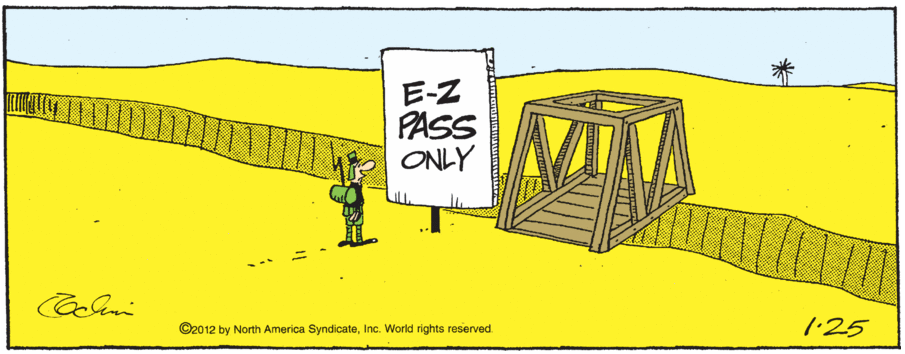
E-Z Pass Only
Improved Car Seat Belt 40% Less Accidents

NHAI's First ETC(Electronic Toll Collection) PLAZA
- ETC based on Microwave Technology(CEN 278) implemented at Delhi - Gurgaon Super Connectivity
Technology by: -Kapsch Metro JV.
News Categories
- NHAI (332)
- Highway (233)
- BOT (231)
- Projects (207)
- Default (204)
- Road (182)
- About (175)
- Infrastructure (160)
- Tolling (108)
- Investment and Finance (102)
- Expressway (98)
- Construction (90)
- Smart City (87)
- NHDP (77)
- ITS (65)
- International (55)
- Delhi (53)
- Safety (53)
- Toll Plaza (51)
- Toll Management System (50)