Six-laning work of NH45 begins
July 15, 2014

Preparatory work has commenced for the six-laning of a 93-km stretch on the Chennai-Tiruchi highway (NH45) from Tambaram to Tindivanam.
According to sources in the National Highways Authority of India (NHAI), the consultant has begun preparing the land plan schedule that identifies government and private lands. The consultant is also drawing up the estimate for shifting of utilities along the road that is used by over 90,000 vehicles a day.
The process including enumeration of trees along the road will take two years. “Since the concessionaire has a contract to build, operate and transfer the road for a period of 17.5 years, which is till November 2019, the NHAI will take a call as to when the work can be taken up,” explained an official. Work to widen the road into a four-lane facility began in May 2002 and was completed in October 2004 when tolling began.
A decision will also be taken regarding widening of the urban stretches upto Tambaram. “We have to take into consideration various factors including the Chennai Outer Ring Road that takes off from Vandalur, the railway track running on one side of the road and the densely populated urban stretch. Land acquisition will be a major issue in these areas,” he said.
R. Samban, who recently travelled by the NH45 to Tiruchi, said that the lighting could be improved on some stretches. “Some of the curves are quite sharp. During the widening, care must be taken to improve visibility at these points. The NHAI must also ensure that trees along the road are not cut but transplanted,” he said.
Sources:The Hindu
Misbehaving of Security personnel and delay in passing
October 21, 2013
From: Balasubramanian M. Iyer
Subject: Misbehaving of Security personnel and delay in passing
Message Body:
This is in furtherance to my below mail of 24th May 2013 relating to earlier incident of 17th May 2013 whereby due to irregular arrangement at your Toll Plaza self sufferred loss which have been sorted out amicably is now past affairs.
Now within a span of 5 months another shamful incident occurred on 18.10.2013 midnight (from 2300 hrs. 2400 hrs) at your above said Toll Plaza whereby the security personnel posted by your Department; who were on DRUNKEN MODE attacked my Office colleagues without any wrong doing by us.
Gist of incident:
Around 2300 hrs. on 18.10.2013 while we are returning from our Office duty at Sikka (we are working for Reliance at their RJMT, Port) the Toll booth is closed and no attendee is there to collect cash. (FYI we are having permanent monthly paid card). As we were so tired and reaching Jamnagar by late and are planning to attend duty next day due to closing of collecting point, upon wating of 10 minutes, we alongwith other vehicles behind us tried to push the ENTRY STICK by side as nobody is attending the booth at time, some security personnels blocked our march and thrashed us which created a noisy scene which is unwarranted.
The things become more worse and Police crom City of Jamnagar have intevened over phone as at that time of incident in police post no personnel available.
This type of incident is badly affecting your brand name L&T as a whole and DUE TO NON MANAGING THE BOOTH WITH WELL EDUCATED PERSONNEL BY YOU IS the result of worst adminstration on your part.
Earlier we have suggested to your Mr. Yashsish Trivedi to allot two entry points for Heavy vehicle and 4 for medium vehicle which fallen on deaf ears of your management. It clearly shows letharginess in manning the Toll Plaza by you and similar types of incidents has been occurred in past month too and no remedial action has been taken.
Submitted please for prompt action and improvement.
Mobile: 9725281857
Expert speak: Dharam Bir Gaba former Haryana minister
September 12, 2013
‘Why do we pay for mismanagement?’
Expert speak: Dharam Bir Gaba former Haryana minister
The Sirhaul and Kherki Daula toll plazas must go. They have failed to deliver on the promise of making the commute between Gurgaon and Delhi hassle-free. Instead, the expressway exposed motorists to daily traffic snarls.
The two toll plazas have become symbols of exploitation of the public. Why should we pay toll when we already pay road tax is the first and most important question that comes to my mind, given the mayhem unleashed on the expressway.
The next question: When will the city be freed of these shackles as the concessionaire has already earned substantial revenue.
The toll is sapping life out of the city and its residents. Has any part of the city not been affected by the tyranny of the toll plazas? I see none. All have been mauled under the dead weight of the toll plazas which was camouflaged as payment for superior services.
We are paying, not for better services but to make life more difficult. The service roads are narrow and poorly maintained, making them motorable only for heavy vehicles.
Most amenities promised by the expressway operator have fallen into disuse because of lack of proper upkeep.
We continue to pay for inferior services despite high inflation. Prices of all essential commodities have gone through the roof. The toll adds to graph as such commodities are transported by road.
How will the common man survive in such difficult times if people continue to pay for mismanagement?
Source-http://www.indianexpress.com
Traffic cops ask eway firm to fix cameras
September 9, 2013
Leena Dhankhar , Hindustan Times Gurgaon,
The Gurgaon traffic police have asked the concessionaire of the Delhi-Gurgaon expressway to ensure all the cameras installed at Sirhaul and Kherki Daula toll plazas work properly.
Currently, the CCTV cameras installed at the two toll plazas are not in order and unable to capture clear footage. The crime branch of Gurgaon police recently reported the matter to the traffic police.
The crime branch teams were unable to identify the vehicles, their number plates and the drivers crossing the toll. “The footage had poor alignment and the picture quality was bad,” said a police officer.
Bharti Arora, joint commissioner (traffic), told HT, “The crime teams were facing difficulties in identifying the vehicles in the footage. The car numbers and faces of drivers were not being captured properly and the offenders were taking advantage of this.”
The traffic police asked the Delhi-Gurgaon Super Connectivity Ltd (DGSCL) to put in order all the CCTV cameras at the earliest so that the culprits could be caught with the help of the footage.
The traffic police asked the firm to intimate the reason for the bad footage quality and the action taken by them in this regard within three days.
“In case of any mishap at the toll plaza, it would be very difficult to apprehend offenders,” said Arora.
Gurgaon: toll plazas violate NHAI guidelines
September 9, 2013
HT Correspondent, Hindustan Times Gurgaon,
The Gurgaon councillors have alleged that the two plazas on the Delhi-Gurgaon expressway, located within the municipal limits, violate the NHAI’s guidelines.
“The two toll plazas should be shifted to some other place — beyond the Gurgaon municipal limits. We will launch agitation against the Union and the state governments,” said a local councillor. Councillor RR Rathee told Hindustan Times that the two tolls on the Delhi-Gurgaon expressway and the one on the Gurgaon-Faridabad highway were a big mockery of the NHAI guidelines.
It is worth noticing that the notification of the department of road transport and highways, dated December 5, 2008, clearly states that the executing authority or the concessionaire should establish toll plazas at least 10-km from the municipal limit.
“How did these toll plazas came up on the expressway within the Gurgaon municipal limit despite the clearly laid guidelines? The Haryana government should have considered this aspect and lodged protest while the concessionaire had entered into the agreement with the NHAI,” said another councillor.
The Toll Hatao Sangharsh Samiti, a body consisting of local residents and leaders, has already raised this issue in the Delhi High Court.
“We are hopeful that the court will take this aspect into account and bring relief to lakhs of Gurgaon residents. We are leaving no stone unturned to do away with this menace,” said Pushpa Joshi, a social activist.
The Delhi High Court will hear the case on September 20.
Meanwhile, the 35 councillors of Gurgaon are also planning to give a representation to the Union and state governments.
Computerised toll plazas on all highways by April 2014
August 14, 2013
ENS Economic Bureau : New Delhi
Users of national highways in the country can expect a hassle-free passage across all toll plazas from April next year, as the road transport ministry has announced plans to implement electronic toll collection on all tolled national highways.
At a panel discussion on next-generation tolling and corridor management, organised by Feedback Infrastructure, road transport minister CP Joshi announced the deadline. “We have recently incorporated a company called Indian Highways Management Company Limited (IHMCL), for implementation of nation-wide electronic toll collection (ETC). The government of India is also amending the Central Motor Vehicle Rules, 1989, for fitment of RFID tag on vehicles by the automobile manufacturers,” Joshi said.
Joshi also added that implementation of ETC will not only make traveling convenient but will also have a lot of other benefits. “With the implementation of ETC, we will see a lot of changes happening in the way projects are bid. Computerisation of tolling will also give a clear and transparent picture on tolls,” he said.
Around 50 per cent of the firm will be owned by companies in the sector. Another 25 per cent will be owned by financial institutions and the rest will be owned by the National Highways Authority of India (NHAI). “We have given more representation to private players in the company. In fact, this is their company and the government’s job is only of a facilitator. Almost all large companies have shown interest in this venture…,” said JN Singh, chairman of IHMCL and member (finance) of NHAI. The company has a paid-up capital of Rs 30 crore, which will be enhanced in due course according to the requirement and will have eight members, including the chairman.
IHMCL will start the process by setting up a Central Clearing House (CCH) for nation-wide ETC interoperability and infrastructure for tag distribution. The company is in the process of inviting Request for Qualification (RFQ) for short listing agencies for implementing end-to-end Turn-key ETC on pan-India basis.
Maintenance firms to be under lens
Soon, companies responsible for maintaining tolling and operations of various stretches and toll plazas will be penalised in case services provided are not of a particular standard. The standards are mentioned in the agreements signed between the government and road developer or operations and maintenance contractor.
“There are various services standards mentioned in the agreements, which the company that maintains the toll plaza and stretch has to provide. In case of a company not being able to provide that quality of service, it will be penalised,” said J N Singh, chairman of Indian Highways Management Company Limited (IHMCL).
Source-http://m.indianexpress.com
DND repair from June 8 to affect traffic in Noida, Delhi
June 5, 2013
Aniruddha Ghosal, TNN |
NOIDA: Traffic on the DND flyway, the most vital link between Delhi and Noida, will slow down from June 8 due to its repair. The work is expected to last at least five weeks, depending on the onset of monsoon in the region, and has been divided into five stages, each focusing on a different part of the route.
Traffic police officials said it would be unrealistic to expect no traffic snarls. “Traffic will definitely be slow on the DND, especially during peak hours, affecting movement across Delhi and Noida. Almost 1 lakh vehicles use DND daily,” said a senior traffic police officer.
The work will resurface the entire flyway barring the Mayur Vihar link road which had already been repaired. After correcting the cracks, a layer of glass fabric will be applied on the road and after this a layer of bituminous concrete will be laid.
“Existing small cracks will be filled up while the larger cracks will be excavated and corrected. The glass fabric will prevent further cracks and reverse osmosis, the primary cause of cracks,” said Anwar Abbasi, spokesperson, Noida Toll Booth Company Limited.
Officials claimed that measures had been taken to help commuters. “We have hired an agency for traffic management and they will, along with our staff, ensure that traffic flow isn’t hampered. The work will take place throughout the day to ensure speedy completion of the project. During summer holidays, there’s also a 30% decline in vehicular movement,” said Abbasi.
The repair, which is being done after consultation with the Central Road Research Institute, has been divided into four 1.5km segments.
In the first phase, the stretch between Delhi and Noida will be repaired. The second stage will see simultaneous repairs of the Sarai Kale Khan ramp and the entry point to the DND from Maharani Bagh. In the third phase, the Yamuna Bridge-toll plaza stretch will be worked upon. In the fourth stage, the toll plaza-Noida corridor will be worked upon and finally repair will be done on the Yamuna bridge itself. Each stage will take approximately a week to finish.
Source-http://timesofindia.indiatimes.com
Excessive Toll Charges at Vasna (lyava) Toll Plaza SH 17
April 29, 2013
From: Hasmukh Shah
Subject: Excessive Toll Charges at Vasna (lyava) Toll Plaza SH 17
Message Body:
Dear Sirs:
On 17.4.2013, I had been to Sanand for the inspection of our GIDC Plot at Sanand. From Ahmedabad to Sanand, I had to pass through a couple of miles of Express Highway for which the Toll Plaza SH 17 TPO1 has charged us Rs.75/- vide Transaction No. TP0L122130417132672 Date and Time 17.04.2013 11.09:34 Hrs.
We feel that the charges are extremely high for using this small piece of Express Highway. In fact, you should have not charged Toll tax for the same.
Please clarify it.
Hasmukh R. Shah
NHAI pushes for removal of Gurgaon toll plaza
April 18, 2013
“This arrangement would mean large number of vehicles plying between Gurgaon and Delhi won’t be subjected to traffic snarls and won’t have to pay toll. On the other hand, the traffic towards Jaipur would pay full toll at a single point outside Gurgaon,” said the official.
Sources said the nitty-gritty of the arrangement are yet to be worked out. These would be proposed by the project’s lender and concessionaire. They added that at present around Rs 18 crore per month is collected as toll from both plazas on the expressway — roughly Rs 12 crore at the 32-lane toll plaza and Rs 6 crore at km 42 toll plaza. In case the first plaza is done away with, the overall toll collection would fall to Rs 10 crore, which would make the plan financially viable for concessionaire Delhi-Gurgaon Super Connectivity Ltd (DGSCL) and the lead lender, Infrastructure Finance Development Company.
DGSCL had taken a loan of Rs 1,567 crore from a consortium of banks led by IDFC for this project. Officials familiar with the development said recovering this net present value (NPV) of the project from a single toll plaza would be impossible. If the plan to remove the 32-lane plaza goes ahead, both the lender and the concessionaire would have to take a financial hit.
In this case, the Haryana government could step in to compensate the project operator and lender. Chief minister Bhupinder Singh Hooda had shown interest last November in “purchasing” the project to make expressway travel hassle free. This would also suit his government in an election year, considering the huge public demand to remove the toll plaza and treat the expressway as an urban road connecting two cities.
These talks are on even as all the three parties – NHAI, IDFC and DGSCL – have filed cases against each other in the Delhi High Court. In the last hearing, IDFC had sought time from the court to put forward a settlement proposal. The court had allowed all parties to come out with a settlement and had fixed the next date for hearing to May 2.
Prepaid card to save motorists from being fleeced at toll plazas
April 17, 2013
MUMBAI: India’s first national highway electronic toll collection (ETC) system was launched in Thane Friday. With this India joined the ranks of the US, Western Europe, Singapore and Australia that have implemented this sophisticated form of technology. The new system will curb overcharging by unscrupulous toll plaza attendants apart from helping motorists avoid long queues or fumble for change. It was recommended by an expert committee headed byNandan Nilekani to ease traffic flow and introduce transparency in toll collection.
Union minister for road transport and highways, Dr C P Joshi, launched the first inter-operable, electronic toll collection system based on radio frequency identification (RFID) technology at the toll plazas of Mumbai-Vadodara section. The launch function was held at village Tawa near Dahanu in Thane district. The RFID tag is a prepaid tag which is affixed in the upper portion of the vehicle’s windscreen. It works as a prepaid toll account and facilitates automatic toll deduction when the vehicle crosses a toll plaza. The unique number of the tag is scanned by the ‘readers’ that are fitted in the dedicated ETC lanes of the toll plazas.

This reading is sent to the central clearing house and the motorist receives an instant text message alert and an email update. The clearing house pools the money and later distributes among toll plaza management as per vehicle usage. This new facility is available at the toll plazas of Charoti, Bhagwada, Boriach, Choriyasi, Narmada Bridge, Karjan and Vadodara. It will be extended to the Vadodara-Ahmedabad section of the national highway and Mumbai-Pune as well. RFID tags can be purchased at designated kiosks located near toll plazas. They can also be bought online and recharged similarly.
http://articles.timesofindia.indiatimes.com/
Featured Insights
- Gurugram: Hero Honda chowk to not choke anymore as Delhi-Jaipur flyover set to open soon
- Future of extensive Smart City projects uncertain
- Financiers express interest for Mumbai-Nagpur super expressway
- Indian start-ups to double by 2020: Nasscom
- SBI inks pact with IIT-Kharagpur for fintech innovation
- Supreme Court refuses to stay Allahabad HC order of making DND fly-way toll-free
- An analysis by CRISIL on the pace of road construction
- Mumbai University gives way for better connectivity at BKC
- Debit card scare: A lesson for banks and their customers
- What is a Smart City ?

The ITW Team
 Sachin Bhatia Chief Editor |


Leisure
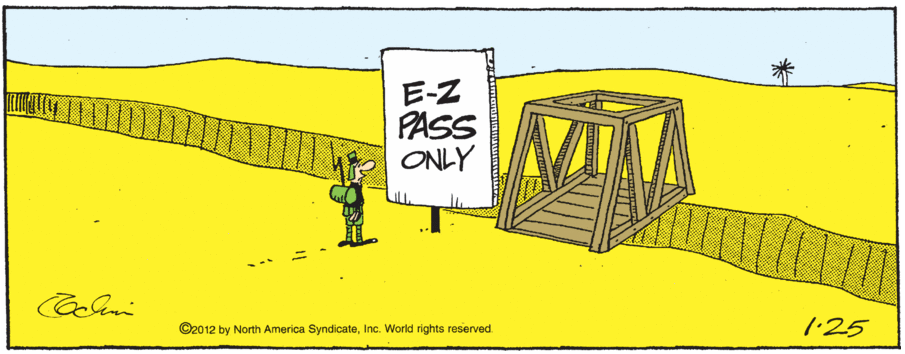
E-Z Pass Only
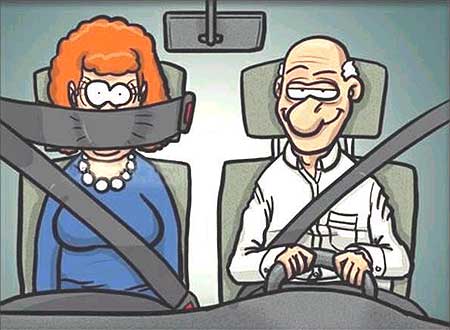
Improved Car Seat Belt 40% Less Accidents
NHAI's First ETC(Electronic Toll Collection) PLAZA
- ETC based on Microwave Technology(CEN 278) implemented at Delhi - Gurgaon Super Connectivity
Technology by: -Kapsch Metro JV.
News Categories
- NHAI (184)
- Highway (63)
- BOT (71)
- Projects (61)
- Default (204)
- Road (43)
- About (175)
- Infrastructure (26)
- Tolling (5)
- Investment and Finance (102)
- Expressway (40)
- Construction (15)
- Smart City (87)
- NHDP (33)
- ITS (21)
- Delhi (32)
- Safety (14)
- Toll Plaza (12)
- Toll Management System (2)
- Metro Rail (42)