Government approves Rs 3,001 cr road projects in Maharashtra under NHDP
September 27, 2013

(The government today approved two highways projects in Maharashtra, including JNPT Port road )
The projects for widening of four laning of Solapur- Yedeshi section of NH 211 and 6/8 laning of JNPT Port road project of Mumbai JNPT Port Road Company were approved by the Cabinet Committee on Economic Affairs (CCEA).
“The CCEA has given its approval for four laning of the Solapur-Yedeshi section of National Highway-211 under the National Highways Development Project (NHDP) Phase IV on Build, Operate and Transfer (BOT-Annuity) in Design, Build, Finance, Operate and Transfer (DBFOT) pattern,” an official statement said.
The cost of the 99 km project is estimated to be Rs 1,057.82 crore including the cost of land acquisition, resettlement and rehabilitation and other pre-construction activities.
The project will expedite improvement of infrastructure in the state and also reduce the time and cost of travel for traffic, particularly heavy traffic, plying between Solapur and Yedeshi.
Development of this stretch will also help in uplifting the socio-economic condition of this region and increase employment potential for local labourers for project activities, it said.
About the Jawahar Lal Nehru Port Trust (JNPT) Port Road Project of the Mumbai JNPT Port Road Company (MJPRCL), the statement said it will be build on BOT-Annuity mode in Design, Build, Finance, Operate and Transfer (DBFOT) pattern.
“The cost is estimated to be Rs 1943.37 crore including the cost of land acquisition, resettlement and rehabilitation and other pre-construction activities,” it said.
The total length of the road will be approximately 43.912 kms of which 20.95 km will be of 6-laning and 22.962 kms will be of 8-laning, it added.
The project will expedite improvement of infrastructure in the state and also reduce the time and cost of travel for traffic, particularly heavy traffic, going towards JNPT.
The project corridor highway consists of NH-4B and NH-348. This network connects the JNPT, including its proposed Navi Mumbai International Airport in Maharashtra.
Development of this stretch will also help in uplifting the socio-economic condition of this region of Maharashtra, the statement said, adding, it will also increase employment potential for local labourers for project activities.
CCI approves 3 new highway projects
October 8, 2012
The Cabinet Committee on Infrastructure approved the development of 3 new national highway projects yesterday, allowing expansion of existing highways.
Projects approved:
Six laning of Handia-Varanasi section of NH-2 in Uttar Pradeshunder NHDP Phase V on Design, Build, Finance, Operate and Transfer basis in BOT (Toll) mode of delivery. The total length of the road will be 72.398 kms. The total cost of the project including land acquisition, rehabilitation and pre-construction activities will be Rs.944.90 crore. The concession period will be 28 years including construction period of 30 months.
Four laning of Hubli-Hospet section of NH-63 in Karnataka under NHDP Phase IV on Design, Build, Finance, Operate and Transfer (DBFOT/BOT) basis. The total length of the road will be 143.29 kms.
The total cost of the project including land acquisition, rehabilitation and pre-construction activities will be Rs.1442.48 crore. The concession period will be 27 years including construction period of 30 months.
Four laning of Kashipur-Sitarganj Section of NH-74 in Uttarakhand and Uttar Pradesh under NHDP Phase IV on Design, Build, Finance, Operate and Transfer (DBFOT) basis in BOT (Toll) mode of delivery. The total length of the road will be 77.20 kms. The total cost of the project including land acquisition, rehabilitation and pre-construction activities will be Rs.685.84 crore. The concession period will be 21 years including construction period of 30 months.
Source: http://www.constructionweekonline.in
Indian government has finally realized the importance of road sector
April 26, 2010
Huge opportunities are unfolding in the Indian road sector. This means most Indian infrastructure and construction companies will benefit from the announcement of new orders or projects in the long run.
Also, a large number of these projects are on Build Operate and Transfer (BOT) and annuity basis, which means the companies will have a steady flow of cash through annuity or toll. This development spells good news for investors who can make full use of this golden chance and earn high returns in the long run.
WHY NOW?
The question that may cross your mind is why now? Ever since Kamal Nath took over as the Union minister for roads and transport, the Indian road segment has taken a new turn. He created various milestones since he was given this portfolio.
The most important announcement he made was the construction of the national highway at the rate of 20 km per day to expedite the achievement of National Highway Development Programme (NHDP) targets. This is significantly higher than the current execution rate of about 6 km per day. The ministry has also been working towards faster clearances related to procedures, land acquisitions and other formalities.
CREATION OF FUNDING
Kamal Nath is aware of the fact that improved road network in the country would not just lead to better connectivity but would also lead to increased energy efficiency in transport operations. He also travelled across different countries on road shows to international investors to highlight opportunities and potential in the Indian road sector.
Through these measures, the government has and will be able to rope in huge investments needed for the sector from international and national long-term investors.
Earlier it was difficult to raise money for more than five years or so as money was available only for a short period. However, now that the corporate debt market is developing, long-term investors like pension funds, mutual fund houses, insurance companies and even banks are coming forward to provide long-term capital. Most road projects, particularly the BOT ones need huge long-term investments in the form of debt and equity to fund them.
INCREASING VIABILITY
In terms of the less viable projects, the government increased the viability gap funding (VGF) or grant to 40% from 25%. Formerly, the grant used to be given after the completion of the project. But now it is handed over at the beginning of the project. In this manner the construction of the project does not get delayed for want of funds.
The government is also working on creating innovative ways of structuring non-viable projects like allotment of land, which can be monetized by developers so that the returns on investments are reasonable.
Other aspects like increasing the role of private players through public private partnership (PPP) and awarding of projects on BOT basis would mean that private players now have a bigger role to play in the construction of viable road projects.
A LONG WAY TO GO
India currently has about 33 lakh km of road network spread across the country. This is the third largest network in the world. But, in terms of density and quality of roads, India still lags behind many developed and developing countries of the world.
In relation to our population, the country’s roads are about 3 km per 1,000 persons, which is significantly lower than the world average of about 7 km per person. In terms of quality, about 80% of our roads are in a poor condition and require huge investments for repair, renovation and increase in the number of lines.
Majority of India’s roads are single line in spite of increasing traffic and congestion. Even the conditions of our existing roads are so bad that India’s logistical cost as a percentage of total production cost is considered to be about twice the world average of 7%.
No wonder due to the poor road infrastructure, India is ranked 87th in the world on the basis of quality of roads, which is very low and considered to be the biggest hindrance for economic growth as envisaged by the government for the coming years.
Surprisingly, within this vast network of roads, only about 2% is accounted for by national highways and a very minuscule part is accounted for by express highways, which is very critical considering that about 40% of the total road traffic is handled by national highways.
The slow transportation of goods has also affected the movement of goods among states, delaying exports and imports of the country. Especially, in the case of transportation of perishable goods like milk, vegetables and flowers among other things, which are procured from the hinterland takes so much time that they become stale or get destroyed before they can actually reach the end consumer and the export market.
This leads to wastage of goods due to the delay in reaching the markets. Express road connectivity to the main ports of the country and to major cities is very important to improve trade volumes and discover better prices for farm goods.
WHAT IS CHANGING?
The government has realized the importance of better roads in the country so that it can support the growth of the economy in the coming years. Roads are critical for any economy, especially a growing economy like India with a large population and different topographies.
The role of roads is of paramount importance for commercial and economic activities in the country. In India, passenger traffic is growing at about 12% per annum, while cargo traffic is growing over 15%, which will continue to rise as economic activities improve along with the increase in foreign trade.
India’s foreign trade is growing at 10-12 % and there is an immediate need to connect all the major ports of the country. The government has taken the first step in this direction. Under the NHDP (phase II), the government will connect major ports and build freight corridors, which will connect many states from the eastern part of India to western India.
In phase III of the NHDP, all major capitals will be connected with highways. Also major cities and points that could not be connected in phase II will be connected with better road infrastructure. Besides, plans are afoot to improve and connect rural India to major cities of the country soon.
EASING HURDLES
Most of these plans are not just on paper. In fact the government has already awarded projects to achieve this goal. The government formed the BK Chaturvedi Committee, which presented its findings and suggestions to make progress in the sector.
Based on the findings of the committee report, several changes have been incorporated and more importantly, the government is seriously working on the recommendations, which are quite innovative and provide solutions to various problems that the companies have been facing.
Changes have been incorporated with regard to land acquisition, which is the biggest problem for construction of roads in the country.
Now, NHAI will work along with the state governments for facilitating land acquisition and all state governments have been directed to coordinate for the same. NHAI now awards road projects only after 80% of the land has been acquired.
FEW SPEED BREAKERS
Tackling delays in approvals, decision-making, faster resolution of disputes and coordination among different departments are few other highlights of the recommendations of the committee report.
Essentially, most of the changes are already in effect and new orders are awarded to interested parties. The flow of new road orders in the last few months was the highest in the last several years. This itself speaks volumes about the commitment of the government and its intention to put things on ground.
Also, the projects which were not viable and did not attract private participation were given extra focus and restructured within time frame along with consultations of private players while changing the terms and conditions of the project. There are other measures also which have attracted private participation in road projects.
Large projects will be built on a BOT basis, which are expected to have a higher return of about 18% to 20% on investments as compared to 14% to 16% earlier. Additionally, the new guidelines that have been framed are such that once a project is awarded for a particular road, the private player is given an assurance that there will not be any competition or construction of road, which will make sure that the cash flow in terms of the collection of the toll is protected.
What is more remarkable is that the government now has experts as representatives from development agencies like the World Bank, the Asian Development Bank, who make sure that the projects are not delayed and hurdles are resolved.
These representatives keep track of projects and act as a liaison between government agencies and private parties. They also bring their experience to structure the project in such a manner that it gets executed.
QUANTUM OF OPPORTUNITY
There are different estimates about the size of the opportunity. But there is little or no doubt that the opportunity is far bigger than what it used to be a few years ago.
When we talk about 20 km per day of the construction of roads, this in itself is self-explanatory. This means that the country will have to build about 7,300 km of roads every year. This is significant as the current run rate is just about 2,500-3,000 km of roads built every year.
One could also imagine the kind of work that will now flow. For the eleventh five year plan which will end in 2012-13, about Rs 3.14 trillion will be invested as compared to Rs 1.45 trillion invested in the tenth five year plan. This is still the tip of the iceberg. India’s investment in the roads segment is expected to be in the range of Rs 10.5-11 trillion over the next decade.
In the near term, about 5,000 km of new expressways will be built and the projects will be awarded for the same. Also, NHAI has plans to award work for about 37,000 km of roads over the next three years.
Besides, under the NHDP’s different phases, the government will award work relating to the upgradation of about 55,000 km of roads over the next 8-10 years.
WHO WILL BENEFIT?
Most construction and infrastructure companies are focusing on this particular segment and their exposure has gone up in the recent past. IRB Infrastructure and IL&FS Transport Network (ITNL) are popular in the roads segment having the highest exposure to the road segment. In the case of IL&FS, the company has recently come out with an IPO and was listed recently.
ITNL is amongst the largest private sector BOT road operators in the country having integrated business model providing service for projects, from conceptualization, construction to operating and maintenance of the road projects. The company has already bagged about 19 road projects.
Apart from roads, the company is also looking for opportunities in airport segments and plans to bid for more projects in this segment. The company’s advantage is its large portfolio of BOT assets and a long experience in the sector. The company has presence across different parts of the country and has about 9,397 lane km of road projects under its belt.
IRB Infra too is a leading player in the roads segment generating almost 100% of its revenue from this segment. The well-known Mumbai-Pune highway, one of its kind in India, is operated by IRB Infra.
The company has an integrated business model having large experience in toll roads and highways sector. The company has about 1,100 km of road projects in its kitty, which is the second largest among private players in the whole of India.
As opportunities are growing, the company should be able to procure more projects and increase its current portfolio. The company will not only benefit on account of the construction of these projects but also due to the collection of toll and annuity from these projects, providing stable future cash flow.
Also most of its projects are strategically located in major traffic areas like Mumbai-Pune, Mumbai-Surat, etc. The company also won projects in other states like Rajasthan and Punjab and is gradually focusing on becoming a pan-India player in the road segment.
Source: stockmarketsreview.com
Infrastructure sector set to receive
April 26, 2010
More bank credit will soon flow to build infrastructure in the country with the Reserve Bank of India (RBI) on Tuesday reducing the level of provision against substandard loans to the sector from 20 per cent to 15 per cent.
The central bank’s decision to treat annuities and toll collection rights under build-operate-transfer (BOT) road and highway projects as tangible securities has also come as a major relief to infrastructure companies.
Banks and institutional lenders said the move on provisioning would enable lenders to loosen their purse strings for the infrastructure sector where long gestation projects often end up with issues that are beyond the control of both the lender and the borrower.
“There are many uncertainties in the infrastructure sector. Often there are delays due to reasons such as obtaining environment clearances and delay in equipment supplies that lead to assets becoming substandard. The RBI move will definitely encourage banks to go ahead and provide more advances to the infrastructure sector since it will provide a comfort factor,” SS Kohli, chairman and managing director of India Infrastructure Finance Company (IIFCL), the government’s flagship infrastructure finance company, told Financial Chronicle.
SBI chairman O P Bhatt said the announcement on infrastructure lending would help banks to finance such projects. “The treatment of annuities as tangible securities under BOT scheme will help attract private equity and give a boost to infrastructure sector,” he added.
UCO Bank chairman and managing director SK Goel echoed the view. “RBI move will reduce the burden of banks since loans to infrastructure projects often become substandard due to technical reasons. With only 15 per cent provisioning requirement, banks will be encouraged to lend more,” he said.
CMD of Bank of Maharashtra (BoM), Allen C A Pereira, said banks have been raising concerns over project delays and asset-liability mismatches in their infrastructure portfolio.
“Infrastructure projects are long gestation projects and several times things do not work out the way it was originally planned. Therefore, there was a strong case for easier provisioning norms for substandard assets. The RBI move is to ensure that banks do not suffer,” Tourism Finance Corporation of India CMD Archana Capoor said.
According to the planning commission, projected investment in infrastructure such as ports, airports, railways, power, irrigation, water supply and sanitation during the 11th plan (2007-11) is Rs 20,54,205 crore. The huge demand for funds can be gauged from the fact that the road ministry alone plans to award projects to build around 18,000 km during this financial year worth more than Rs 1,50,000 crore. Of this, 65 per cent of projects would be on BoT toll basis, 20 per cent on annuity and remaining 15 per cent on engineering, procurement and construction (EPC) model.
However, bankers said the RBI move was not to make banks meet their overall credit growth target when of offtake to sectors such as real estate has slumped. “These issues are not linked. The slowdown in overall lending and to the housing sector may be due to other reasons. Housing loan borrowers may be adopting a wait-and-watch approach,” Pereira of BoM said.
UCO Bank’s Goel agreed: “This is purely to encourage flow of funds to infrastructure sector. Overall credit growth and trends for specific sectors cannot be linked.”
Meanwhile, infrastructure companies have welcomed the decision to treat annuities and toll collection rights under BOT projects as tangible securities, saying the decision would give private road developers easier access to funds at lower interest rates.
At present, in BOT road projects, there is nothing that can be considered as tangible asset. This is because the concessionaire has to transfer the land either to the National Highways Authority of India (NHAI) or the state government after about 30 years of the agreement. Toll collection is also uncertain and therefore treated as an intangible asset. This makes it difficult for developers to obtain loans under the secured category.
“Now that the RBI has allowed annuity and toll collection rights as tangible securities, where there are provisions to compensate the project sponsor if a certain level of traffic is not achieved, it will make banks pro-active to lend to the sector,” Issac A George, chief financial officer of GVK Power and Infrastructure, said.
In its credit policy, RBI said annuity and toll collection rights should be treated as tangible securities subject to the condition that banks’ right to receive them is legally enforceable and irrevocable.
“Most banks offer loans to road developers under secured categories. However, there are lots of provisions and agreements that the parties work out among themselves. The developers also pay a higher interest rate of up to one and a half per cent for unsecured loans. The RBI announcement will help developers to save the additional interest cost and avoid legal troubles,” said Vishwas Udgirkar, an executive director at PricewaterhouseCoopers.
The move is also expected to lower the cost of road projects. “The RBI move to treat annuities and toll collection rights as tangible securities will create a healthy market for securitisation of toll portfolio, thereby reducing the cost of road projects after construction,” said Hemant Kanoria, chairman and managing director of Srei Infrastructure Finance.
Source: mydigitalfc.com
TEXT-Fitch affirms SNBTPL ‘s bank loans at BBB-(ind)
April 19, 2010
April 16 – Fitch Ratings has today affirmed SEW-Navayuga Barwani Tollways Pvt Ltd.’s (SNBTPL) senior long-term project bank loans aggregating INR5,474m at ‘BBB-(ind)’, and subordinated bank loans of INR300m at ‘BB+(ind)’. The Outlook is Stable.
SNBTPL enjoys an 18-year concession from National Highways Authority of India [NHAI.UL] (NHAI, ‘AAA(ind)’/Stable) to design, engineer, build, finance, construct, operate and maintain on a Build, Operate and Transfer (BOT) basis an 82.8km road stretch on the National Highway 3 (NH-3) in the state of Madhya Pradesh. The estimated cost of the project is INR7.9bn, with the scheduled commercial operations date (COD) in May 2011.
The affirmations follow SNBTPL’s reasonable progress over the last year in achieving different project milestones during the critical construction phase. Fitch does note however that the company is slightly behind plans. The entire right of way (ROW) required for the project is reportedly in the company’s possession, with the exception of a three-km stretch of forest land; however, first-stage approvals have been received from the forest department.
As of March 2010, the project has received equity infusions (61.3%), and has been drawing down on term loans – 58% of senior debt and 57% of sub-debt – as per schedule.
The ratings are constrained by the residual completion risk, although a fixed-price construction contract with SEW, whose terms mirror those in the concession, offer protection. Base-case debt service coverage metrics are extremely modest and vulnerable to various deep stress tests Fitch performed. A three-year tail in the concession allows the banks to restructure the loans, if necessary. Some liquidity support is available in the form of a fully-funded debt service reserve account (DSRA), equivalent to three months’ principal and interest payment.
Fitch has factored into its rating the operational track record and financial strengths of the sponsors. This includes the credit enhancement value of their undertaking to finance the cost and time overruns, to replenish the senior and subordinated DSRA and to provide unconditional and irrevocable bank guarantees if event project cash flows are inadequate to create the DSRA. Additionally, SEW has executed a letter of undertaking to the senior to infuse INR100m, after the COD, to augment debt payment capacity and to inject additional funds in case operations and maintenance expenses exceed the base case projections submitted to the banks.
The agency believes that the road has long-term economic potential, and that its locational advantage should have a beneficial impact on tollable traffic. Also, it is situated on the highway that represents the shortest distance between Mumbai and Agra.
SNBTPL is a 74:26 JV between SEW infrastructure Ltd (SEW, ‘AA-(ind)’ / Stable) and Navayuga Engineering Constructions Ltd (NECL). Following inter-se adjustments among the sponsors, SEW has increased its equity stake in the project to 74% from the 51%, resulting in a reduction in NECL’s holding to 26%.
Applicable Criteria available on Fitch’s website at www.fitchratings.com: “Rating Criteria for Infrastructure and Project Finance”, dated September 29, 2009.
Source: in.reuters.com
17 states pledge cooperation for highways projects
April 19, 2010
New Delhi, April 13 (IANS) Seventeen states and the union territory of Chandigarh Tuesday assured support to the centre for timely execution of highways projects in the build, operate and transfer (BOT) mode.
The governments of Andhra Pradesh, Arunachal Pradesh, Assam, Chhattisgarh, Haryana, Himachal Pradesh, Jharkhand, Maharashtra, Madhya Pradesh, Manipur, Meghalaya, Nagaland, Punjab, Rajasthan, Tripura, Uttarakhand, West Bengal and the union territory of Chandigarh signed the State Support Agreement (SSA) with the ministry of road transport and highways.
The agreement was countersigned by the National Highways Authority of India (NHAI).
For the development of highways, support of the state governments is essential in the matter of land acquisition, removal of encroachments, shifting of utilities, rehabilitation and other local law and order related issues.
“The SSA aims at formalising the cooperation arrangement with the state governments to the implementation of the extensive programme of development of national highways on public-private-partnership (PPP) through the NHAI,” an official statement said.
Five states — Karnataka, Kerala, Goa, Puducherry and Sikkim — will also sign the SSA soon, it said.
However, Uttar Pradesh has indicated its desire to withdraw from the SSA it signed earlier.
“Discussions are going on with the government of Uttar Pradesh to resolve the matter,” the statement added.
Source: sindhtoday.net
Vadodara-Bharuch NH-8 stretch not equipped to handle fire mishaps
April 19, 2010
VADODARA: The Vadodara-Bharuch stretch of National Highway-8 is not equipped to handle any major fire incident.
An RTI application has revealed that as per an agreement signed between National Highways Authority of India (NHAI) and private operator L&T Vadodara Bharuch Tollway Limited (VBTL),which had bagged the six-laning project of 83.3 km stretch of NH-8 on build, operate, transfer (BOT) basis, L&T VBTL is supposed to provide fire brigade service on the highway. But, the ground reality is that there is no fire brigade service on the stretch, which ironically witnesses highest traffic movement, including vehicles that transport chemicals.
The RTI response that was provided to applicant Yashwant Jangid by NHAI states that as operations part of operation and maintenance (O&M) manual, the operator will have to take care of ambulance, fire brigade and tow away trucks and cranes as rescue and medical aid services. The documents under schedule-L carry stamps of both NHAI and L&T VBTL.
But, an L&T VBTL official looking after accident management of the stretch told TOI that he wasn’t aware about such a clause in the concession agreement. “If there is a fire incident on the stretch, we have handy fire extinguishers. If still the fire does not get extinguished, then we call local police which in turn contacts local fire brigade to do the needful,” the official said.
“L&T VBTL officials interpret that the clause in the agreement is to provide only fire brigade services, which does not mean that the highways should have fire vehicles stationed,” a NHAI official claimed. But, the fact remains that L&T VBTL has never approached Vadodara Fire Brigade and Emergency Services (VFBES), managed by Vadodara Municipal Corporation, to get their service.
“We are supposed to function and provide our services only in municipal jurisdiction of Vadodara. When we cross corporation limits, our services are charged. But, we have series of bills pending which neither the contractor of the highway nor the victims of accidents have paid,” chief fire officer of VFBES H J Taparia told TOI, adding that L&T VBTL has never approached them to sign an agreement for such services.
Incidentally, even on Wednesday morning, VFBES officials had to rush to Dumad Chowkdi from the starting point of Vadodara-Bharuch highway when a truck rammed a tree leaving the driver dead on the spot, while officials extricated a cleaner’s body that was trapped by using hydraulic equipment.
“We handle nearly 35 to 40 calls a year on this part of the highway as nobody is ready to go on that road,” Taparia added.
Source: timesofindia.indiatimes.com
Backward-bending policy to take toll
January 5, 2010
The B K Chaturvedi committee has suggested ways for expeditious financing and implementation of the National Highways Development Project (NHDP). It has rectified problematic rules concerning the exit policy, bid security, security to lenders, request for qualifications (RfQ) and request for proposal (RfP). These belated measures will surely make highway projects more attractive for investors.
However, some other recommendations bear unmistakable signs of fear psychosis, perhaps caused by the reduced private investment in highways during 2008-09. The decline was largely due to two reasons: the detrimental and mid-course changes made in RfQ and RfP rules, and the economic downturn. But in a typical panic-driven response, the committee has confused symptoms with the causes. Thus, it has introduced some questionable changes in the model concession agreement (MCA) for tolled projects. Conversely, several crucial issues have been ignored.
To put arguments in perspective, recall the pre-August 2008 scenario: 9%-plus growth rate, upbeat credit and financial markets, and bullish investors scrambling for projects to invest in. During 2006-07, more than 60 highway projects attracted private investment. In fact, there was a shortage of well-structured projects on offer.
The extant rules regarding the viability gap funding (VGF) and termination of contract posed no threat to the attractiveness of highway projects. Yet, the committee has targeted these rules to implement investors’ wishlist. Under a BOT-toll contract, an investor is granted the right to charge toll from users.
There are two main justifications for this concession: investors provide upfront funding for projects, alleviating the taxpayers’ burden, and bear the construction, maintenance and commercial risks. VGF grant is provided to make a socially-desirable but unprofitable project attractive for an investor. The underlying objective is not, and should not be, to add to the upfront financing — that is for the private sector to do. Limited funds are available for VGF. The MCA rules allow VGF up to 40% of the project cost; 20% during construction phase and the rest during maintenance phase.
In contrast, the committee has offered the entire grant during construction phase itself, and has reduced
it to a mere cost-sharing device. Further, compared to what would have been possible under the earlier rules, now the grant requirement of fewer projects will be met with. So, at least in the short run, fewer grant-dependent projects will take off.
Besides, an investor can borrow 20% of project cost at concessional rates from the IIFCL, a public sector company. Indeed, excluding the profit margins, an investor can meet up to 70% of cost just using grants and other funds raised by public sector entities. Simply put, what was to be the investor’s responsibility has been passed on to the taxpayer, undermining the rationale of VGF as well as toll contracts. Moreover, an investor is reimbursed 90% of due debt if the contract gets terminated. So, the new rules are likely to create moral hazards during construction phase and later.
Under MCA rules, if actual traffic turns out to be less (greater) than predictions, the concession period is increased (reduced) proportionately. If traffic increases beyond the designed capacity, to avoid congestion, the concessionaire is required to widen the road at his cost. These rules imply that road users get satisfactory service, and the investor and the taxpayer share the unanticipated losses (gains) arising from traffic-risk. In contrast, under the new rules, if the government asks for capacity expansion on account of high traffic, it will have to compensate the investor. Moreover, the contract period cannot be reduced. So, the event of traffic exceeding the designed capacity has become lucrative for the investor. It would ensure them unexpectedly high profit.
Source: economictimes
Bumps in road funding to be eased
December 3, 2009
NEW DELHI: The government is exploring ways to improve flow of funds to developers executing road projects by making funding of such projects
attractive for financial institutions, including insurance companies.
The panel on highway development, headed by the Planning Commission member BK Chaturvedi, is now working on the second part of its report on expediting work on the ambitious National Highways Development Project (NHDP).
“We have sorted out funding issues of the NHAI through cess and government guarantees, at least for one year. Now we have to look at the issue of financing of people who are building the roads,” Mr Chaturvedi said in an exclusive chat with ET.
The government has already accepted Chaturvedi panel’s recommendations on relaxing the norms for public-private projects (PPPs) in the road sector, continued funding of National Highways Authority of India through road cess collection and government guarantee for its borrowings.
The government has set a target of constructing 7,000 km of road annually, which translates into building 20 km of roads a day. It is planning to hand out contracts for nearly 12,000 km of highways to private developers in the next one year.
“We are examining what kind of safeguards are required to make insurance companies lend to road projects,” he said, adding that they would want the government to share risk and also give guarantees that the debts would be repaid.
The panel is still in the process of collecting information from the industry and other parties concerned and hopes to finish its report by January-end.
The government has decided to guarantee NHAI’s borrowing for the current year. The financing of NHAI in the years to come is yet to be decided. “ The empowered group of ministers set up on road financing will look at how the funding requirements of NHAI will be handled in the following years,” Mr Chaturvedi said.
Although NHAI does involve the private sector to fund projects through the build operate and transfer (BOT) mode of finance, it has its own financing needs as well.
NHAI has to invest in all projects carried on EPC or cash contract basis, which is the standard financing format in the North East and J&K where private players are not too keen to take risks because they are commercial unviable in these areas.
NHAI has to make some investments even in projects that are handed out to private road developers through the build operate transfer (BOT) basis to the extent of making them commercially viable, through what is called viability gap funding.
It has to pay an annual annuity to developers under the BOT annuity option and provide capital grant to increase viability of projects under the BOT toll option where private developers are allowed to collect toll for recovering costs and earning profits.
Source: economictimes.indiatimes.com
LANCO bags two toll road projects in Karnataka
August 4, 2008
LANCO Kondapalli Power Pvt Ltd, a subsidiary of LANCO Infratech Ltd, has bagged the contract for construction and operation of two road projects in Karnataka on Build, Operate and Transfer (BOT) basis under the National Highways Development Project (NHDP) Phase III.
The company has formed two Special Purpose Vehicles (SPVs) – LANCO Hoskote Highways Pvt Ltd and LANCO Devihalli Highways Pvt Ltd for undertaking the projects. The concession agreements for the projects have been signed with the National Highways Authority Ltd. The two road projects are the 81 km Bangalore-Hoskote-Mudbagal stretch on National Highway 4 and 82 km Neelamangla – Devihalli stretch on National Highway 48. The project involves six laning of 16 km stretch and four laning of the remaining stretches. The total project cost is estimated at Rs 1,006 crore. The concession periods are 20 and 25 years for the two projects respectively, including 30 months of construction period. The contracts have been awarded through a competitive bidding process.
LANCO Group is one of the fastest growing corporate entities in India. LANCO has more than two decades of experience operating in the core sectors of Power Generation, Power Trading, Realty, Engineering and Construction, Information Technology and Manufacturing. At present, the power portfolio includes an operating capacity of 518 MW and additional capacities under construction aggregating to more than 3,200 MW. The Construction and EPC division of the company is executing various orders worth more than Rs 7,500 crore. LANCO is also developing LANCO Hills, one of the largest integrated township properties in Hyderabad, which will have a developed area of more than 30 million square feet and one of the tallest residential towers in the world. The development of the property is estimated to cost Rs 5,500 crore.
Source: moneycontrol.com
Featured Insights
- Gurugram: Hero Honda chowk to not choke anymore as Delhi-Jaipur flyover set to open soon
- Future of extensive Smart City projects uncertain
- Financiers express interest for Mumbai-Nagpur super expressway
- Indian start-ups to double by 2020: Nasscom
- SBI inks pact with IIT-Kharagpur for fintech innovation
- Supreme Court refuses to stay Allahabad HC order of making DND fly-way toll-free
- An analysis by CRISIL on the pace of road construction
- Mumbai University gives way for better connectivity at BKC
- Debit card scare: A lesson for banks and their customers
- What is a Smart City ?

The ITW Team
 Sachin Bhatia Chief Editor |


Leisure
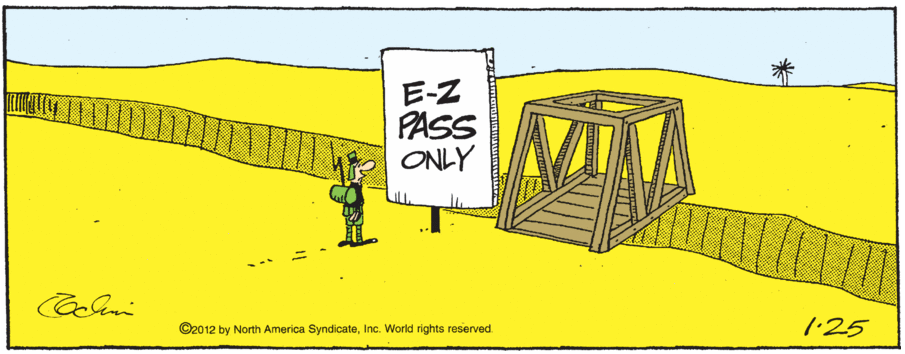
E-Z Pass Only
Improved Car Seat Belt 40% Less Accidents

NHAI's First ETC(Electronic Toll Collection) PLAZA
- ETC based on Microwave Technology(CEN 278) implemented at Delhi - Gurgaon Super Connectivity
Technology by: -Kapsch Metro JV.
News Categories
- NHAI (332)
- Highway (233)
- BOT (231)
- Projects (207)
- Default (204)
- Road (182)
- About (175)
- Infrastructure (160)
- Tolling (108)
- Investment and Finance (102)
- Expressway (98)
- Construction (90)
- Smart City (87)
- NHDP (77)
- ITS (65)
- International (55)
- Delhi (53)
- Safety (53)
- Toll Plaza (51)
- Toll Management System (50)