Smooth Roads and Long Journeys
June 22, 2016
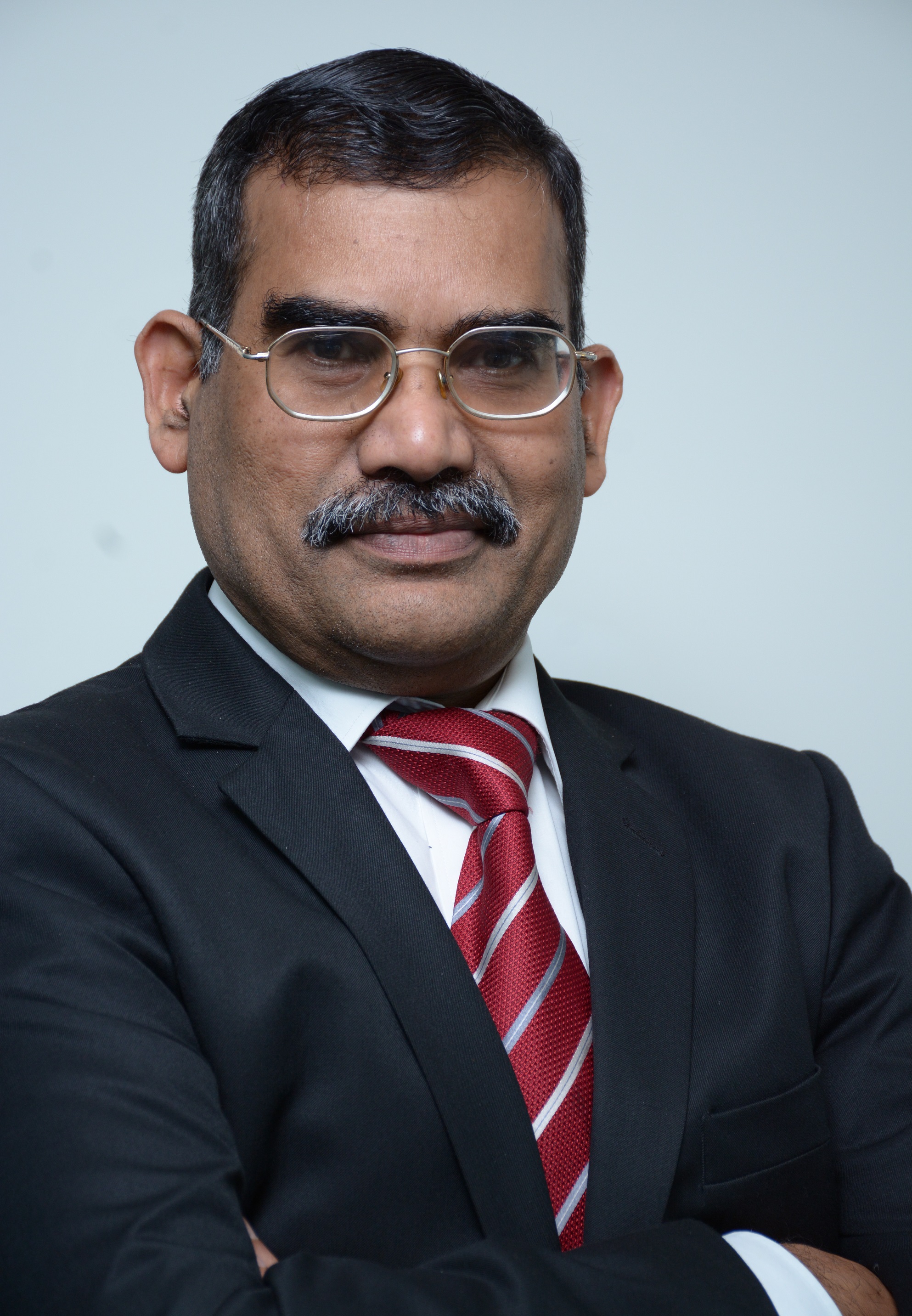
Meet AP Hota, MD&CEO, National Payments Corporation of India (NPCI), the man overseeing the setting up of a nationwide payment infrastructure that will enable barrier-free tolling. Over the last five years, NPCI has travelled a fair distance itself, starting from a single service of switching of inter-bank ATM transactions. Today, the range of services has grown to cheque clearing, immediate payments, automated clearing house, electronic benefit transfer and a domestic card payment network named RuPay. Its long-term goals are to get every Indian to start making digital transactions in every sphere of life, reducing their dependency on ATMs.
Excerpts from an interview:
What is the relevance of NPCI to infrastructure?
NPCI falls into the category of financial market infrastructure. Our infrastructure is not visible to the naked eye. The financial market infrastructure, however, is huge. Within this, NPCI plays the role of a utility. We are like a utility to the banks wherein we facilitate over 20 million transactions daily.
Surely, such volumes require a robust data connectivity network?
Yes, the most important challenge is the telecommunication and data networks that we face in our work to connect banks and to connect people. While all the major banks are already connected, there are banks in the remote areas that cannot connect because the data grid technologies are not in place. There is an attempt to make mobile banking available and pervasive. However, only the short-message service (SMS) and call services are available throughout the country, not the data grid services. This is where the government’s optic fiber network, whenever it gets rolled out, will be useful since only then, financial services will be able to ride on that network.
Moreover, in financial services, we need 24*7 power. This is why companies are shifting their data centres to Hyderabad because, possibly, the availability of power there is much better. For instance, beyond Vashi in Navi Mumbai, uninterrupted power is not available. This is why nobody wants to put up their data centres close to Mumbai because if they do that, their data centres will have to run on diesel generators and that will be much more expensive. Chennai, Bengaluru and Hyderabad are preferable destinations in comparison.
Even where you do have connectivity, India ranks pretty low on speed and quality of connection. Comment.
This is true. Even when someone is expected in our office, and we need to provide a demo, we have to be very careful to see that the mobile network is really working properly! Since connectivity is a problem, we may have to go to certain corners or areas where the signals are stronger to get the link. This is the scenario in a city like Mumbai in the middle of its new financial hub. Nonetheless, it is improving and there hasn’t been a serious issue that has affected any transaction in the real world. However, if we want to integrate the whole country with a digital payment system, the optic fiber network is something we will have to look at for this purpose. A great thrust is coming on our payments system on mobile devices.
How are you dealing with this?
The challenge is with respect to the data network. There are quite a few dark spots in the country where there is zero connectivity. There is no mobile connectivity even. We have come out with a solution which is that we use the USSD-based financial transaction. This stands for unstructured supplementary service data and it means that wherever the voice grid link is available, USSD also works. This channel is not a data channel but almost like a voice grid channel but on which messages can travel. It is possible at least for the GSM (Global System for Mobile Communications) phones. USSD is a capability built into the GSM standard. This is already in operation with almost a million transactions daily but for such a large country, a million transactions are also hardly anything!
Are you involved in the e-tolling project for setting up the clearing house?
The National Highways Authority of India (NHAI) has given us the responsibility to build the clearing house for e-tolling. In this system, we are envisaging a barrier-free tolling system. For this, at the back-end, the money transaction will happen through us.
Sometime back too, this had been envisaged. What happened?
What had happened then was that some toll booths were given to ICICI Bank and Axis Bank. ICICI Bank made it operational in about 160 toll booths and issued about 300,000 cards or so. Many of them are not working right now. A particular area was also given to each of the banks and they were not allowed to infringe on each other’s areas. Similarly, in the south, few areas were given to Axis Bank. However, Axis Bank did not start the project at all. ICICI Bank began but it was nominal. Now, however, there is a plan to make it inter-operable. In this new system, all banks will be able to issue cards. If this happens, and the data needs to go to different banks, there will have to be an interbank transaction. That will be done through the clearing house. We have started the work of building the clearing house. We are awaiting the Reserve Bank’s approval of the clearing system as this is a payment system with multiple banks. We expect the time-line to be around July or August. Initially, around 300 toll booths would start this off. It is already there in 160 booths by ICICI as mentioned earlier but they will have to slightly revamp their process to align with the new system. The toll booths have already been told to ready themselves along the Golden Quadrilateral, to start with. This can then be taken forward on the state highways.
Initially, they have mandated only one lane on each side. Gradually, they will increase this as and when the cards are issued in bigger numbers. The numbers of electronic toll collection (ETC) lanes will also go up simultaneously. In two-three years from now, most of the lanes will be ETC lanes. The cards will be sold mostly through the toll booths.
Do the cards issued by banks need to be displayed or would it be done via the license plates?
It will be an RFID card, and not with the license plate.
In the future, do we have to display these cards as a norm?
Yes, because one could probably tamper with number plates leading to problems in reconciliation. Moreover, all new cars released to the market also carry a chip with certain functionalities that can be leveraged. However, we are not adopting this like in many other countries. I do not know if the cars in India have this device with an RFID tag but nonetheless, the majority of the cars out there today are old cars. They would not be having this device so it is better to go for the card system issued by banks.
What are the new products that you are bringing to the market?
Quite a few, actually. One of them is the unified payments interface (UPI) which is an improvement over the current real-time money transfer. Sending money in real-time 24*7 via any channel was already there. Now, we have improved it by making it real-time collect. Earlier, it was only real-time sending. Also, earlier, for sending money, you needed the bank account number and other details. Now, I can just ask you a financial address. Suppose I want to send money to you and you have already registered under the new system, say – karan@hdfc – I can send money to this address. HDFC Bank will translate this to make the deposit in the appropriate account. So, the financial address is email-like.
The second product that we expect to introduce by the end of June is the bill payments infrastructure. Currently, we pay most of our utility bills mostly in cash or cheque. Therefore, we are setting up a national level bill payments infrastructure.
The third product is the e-tolling that I talked about earlier. The fourth product is tap-and-go payment. We are trying this out in Bengaluru with the public bus commute system. People can just tap a device and walk into the bus and tap it again before dismounting. These systems were tried earlier in different cities but they were not scalable. Now, there is a national specification and these would be rolled out based on some common standards. In fact, the name already proposed by the Honourable Urban Development Minister Venkaiah Naidu for this card is the National Common Mobility Card. This is proposed to work for buses, trains, taxis and even the metro. Hopefully, our project will begin in Bengaluru soon, followed by Kochi Metro which will be a full-fledged roll-out. In Bengaluru, the card will be issued by only Axis Bank but in Kochi, there will be multiple cards.
We also have a plan for coming out with RUPay credit cards.
What is your vision and your long-term targets?
People should be primarily transacting digitally, for every need, not relying on ATMs all the time. The banks are the custodians of people’s money as well as the prepaid issuers and we aim to facilitate their transactions. If people transact digitally, there will be less movement of cash and consequently, less printing of cash. The government will therefore, save a significant amount of money. The Reserve Bank of India is supportive of our initiatives and the government is also extremely enthusiastic about it.
PPP in infrastructure gets a big push
July 11, 2014
UNION BUDGET 2014-15: THE MODI ERA
VINAY KUMAR

The favoured PPP route ran like a common thread in Mr. Jaitley’s speech when he touched upon sectors such as urban renewal, urban transportation, real estate and gas pipelines.
In his Budget speech, Mr. Jaitley proposed setting up of an institution, called 3P India, with a corpus of Rs. 500 crore to provide support to mainstreaming PPPs.
The stamp of ‘Modinomics’ could not be missed in favouring the PPP route for development as the BJP’s manifesto and Prime Minister Narendra Modi rooted for it to help create world-class infrastructure in the country.
However, Mr. Modi during his tenure as Gujarat Chief Minister had added another ‘P’ (People) to it to signify people’s involvement in such project and the 4P concept was successfully tried in the Vadodara Halot Toll Road project.
The favoured PPP route ran like a common thread in Mr. Jaitley’s speech when he touched upon sectors such as urban renewal, urban transportation, real estate and gas pipelines.
“The task before me today is very challenging because we need to revive growth, particularly in manufacturing and infrastructure to raise adequate resources for our developmental needs,” Mr. Jaitley said.
Largest PPP marketThe Finance Minister said India had emerged as the largest PPP market in the world with over 900 projects in various stages of development. Iconic infrastructure like airports, ports and highways, delivered through PPPs, are seen as models for development globally, he said.
Sounding a note of caution, Mr. Jaitley said: “But we have also seen the weaknesses of PPP framework, the rigidities in contractual arrangements, the need to develop more nuanced and sophisticated models of contracting and develop quick dispute redressal mechanism.”
He reiterated the government’s commitment towards improving infrastructure in all sectors including roads, port, airports, railways, urban, rural and industrial infrastructure besides ensuring adequate flow of funds and financing of projects.
Mr. Jaitley proposed to develop an additional 15,000 km of gas pipeline systems in the country using appropriate PPP models.
“This will help increase the usage of gas, domestic as well as imported, which in the long-term will be beneficial in reducing dependence on any one energy source,’’ Mr. Jaitley said.
Source-http://www.thehindu.com/
Lack of clearances delays infrastructure projects
October 16, 2013
Pavan MV, TNN |
BANGALORE : Inspection of ongoing infrastructure projects is springing surprises at every turn , with decision makers finding that basic approvals haven’t been sought.On Tuesday , Bangalore development minister R Ramalinga Reddy found that the BDA requires 3.2 acrestocomplete the Nayandahalli flyover near Mysore Road which has been hanging fire for two years .Shockingly , the BDA commenced construction without completing land acquisition . The construction of the 960-metre long flyover began in 2010 and was scheduled to be completed by 2013 . Even if BDA gets the required land now , it needs five months to completethe project .Theland belongs to over 40 people .
Last week, during the inspection of the Road Over Bridge near Byappanahalli , mayor Sathyanarayana found that BBMP had commenced work on two ROBs at Byappanahalli and Jakkur without completing land acquisition .
The delay in the Nayanhahalli flyover has become a huge problem for commuters on Mysore Road due to frequent traffic jams . Alongside , work on the Metro rail is on and is adding to the gridlock .
Ramalinga Reddy said , “Since the property is situated on Mysore Road , its value is quite high and the owners expectusto pay the market value . We’ll sort out the issue soon .”
Metro corridor
After inspecting the Metro corridor work , Ramalinga Reddy said the National College Metro corridor will be completed by March 2014, and the train will run from Byappanahalli station to Mysore Roadstation by 2014.He also assured that Metro services from Peenya to Malleswaram would be operational by this year-end and work from Kaggalipura to City Market will be completed by 2015.
Pradeep Singh Kharola , MD, BMRC, said there is a proposal to concretize the road below the Metro corridor from MG Road station to Byappanahalli station . Asked about bad roads below the Metro corridors , he said road work cannot be taken up till Metro work is on .
On parking
BBMP is gearing up to provide parking for Metro commuters. BS Sathyanarayana said BBMP will identity properties belonging to it near all Metro stations. “Ramalinga Reddy has told us to utilize funds under the Jawaharlal Nehru National Urban Renewal Mission scheme for this project,” he said.
Odisha needs more pvt funds for transport sector: minister
October 7, 2013
Govt has recently launched Rs 3,000-crore plan to develop state highways within next four years
“Without adequate investment in road and railway transport infrastructure, private investment only in building new ports will be in vain. Better transport infrastructure will ensure higher manufacturing activities too”, he said at Transport Infra Odisha-2013, a conference organised by Indian Chambers of Commerce (ICC) here to highlight different issues of the sector.
The minister said, Public Private Partnership (PPP) is being promoted for physical and social infrastructure creation. The state also seeks to augment public sector investment in high priority sectors like infrastructure.
The state government has recently launched a Rs 3000 crore plan to develop state highways within next four years. However, there is need for more investment from private and government-run PSUs in this sector, he said.
Tarai recently met Union Railways minister on a proposal to develop rail link from Bimlagarh in Koira tehsil of Sundergarh district to Talcher in public private partnership (PPP) mode. Steel Authority of India Ltd (SAIL) has shown interest to invest in the project.
“As of now, SAIL, the Railways and the state government are ready to invest in the Rs 800 crore project. I am sure more partners would come forward to participate in the project, which after completion, would reduce total travel time from Rourkela to Cuttack by at least five hours”, said the minister at the conference.The proposed rail line will help in transporting steel products of Rourkela Steel Plant in minimum possible time, he added.
Besides the rail project, the state government has taken initiative to develop the Rs 5000 crore National Waterways-5 by partnering with public sector enterprises and private investors instead of waiting for World Bank fund as that might delay the project implementation.
Source-http://www.business-standard.com
Connecting India: It’s still a long, bumpy road ahead
September 18, 2013
By Raghav Chandra

The last three years have been remarkable for Indian road infrastructure: projects of 15,000 km were awarded during 2010-13. Yet, there is a huge task ahead. A decade ago, the bulk of the programme was done via the public funding route, today, 90% of highway development is undertaken via public-private partnership (PPP): on a design, build, finance and operate basis, where the private sector is involved in the entire project life cycle and shares commercial risks.
Surprisingly, many bids received did not ask for viability-gap funding and, instead, went for a hefty premium. While such flamboyant bids were a recognition of the unforeseen and untapped multiplier and induction effects of highways networking, they underlined the importance of private funding and effective implementation of contracts.
Some of the most strategically important cities of India are being connected now: for instance, Ahmedabad-Vadodara and Kishangarh-Udaipur-Ahmedabad would connect with Delhi-Jaipur-Ajmer-Kishangarh-Mumbai-Surat-Vadodara to complete the Delhi-Mumbai corridor. Similarly, Gwalior-Shivpuri and Shivpuri-Dewas would fill critical links for another alternate corridor connecting Delhi and Mumbai via commercial Indore. Similarly, Amravati-Jalgaon-Dhule would help connect Hazira port in Gujarat to Paradip port in Odisha and eventually mirror the East-West corridor along India’s economic hinterland of Gujarat and Maharashtra all the way to Kolkata.
But when the economy hits a speed breaker, the projected network externalities appear exaggerated and committed financiers pull back. When a single project languishes, it has a domino effect on all others whose viability suddenly becomes suspect. In normal times, there are challenges of financing because of an asset-liability mismatch and exhaustion of exposure limits of banks. Today, highway development requires stronger commitment to tide over wavering macro fundamentals. Besides, there are many roads of low-commercial viability in economically-backward areas that can only be undertaken through public funding.
But the most critical challenge today is on the implementation side. The National Highways Authority of India is overloaded and focused largely on award of projects. Contract management and oversight to ensure quality construction, maintenance and completion has taken a backseat under the PPP model. The private sector faces a dearth of managerial resources that can competently handle complex issues involved in coordinating with a multiplicity of governmental and local agencies.
While PPP models are useful to support fiscal constraints, they are not perfect panaceas. The government cannot afford to depend on the efficiency of the PPP developer. The former needs to nudge, cajole and guide the concessionaire and work with him to make him fulfil his commitment without compromising on standards, quality and timeliness. The regulatory capture of the independent engineer is a reality that cannot be ignored and discounted.
Further, the involvement of state governments has been missing despite their key role in facilitating acquisition of land, shifting of utilities and providing security and encroachment-free passage for uninterrupted right of way. States, along with their city governments, need to build their own connectivity corridors and spruce up main district roads and municipal roads by adopting innovative methodologies that leverage land and development rights. States should establish Road Development Corporations and vest them with adequate authority and resources. Having the chief minister as the chairman and the chief secretary as the vice-chairman, a model adopted in Madhya Pradesh in early 2004, will ensure highway development gets strategic support.
The challenge is speedy award of remaining highways and effective implementation of already awarded ones. Development of high-speed corridors between important urban centres and specialised connectivity projects is the need of the hour. It is not enough just to have a highway that connects two important points.
When commercial competitiveness is defined by the speed and reduced cost of transaction, it is imperative to have safe access-controlled travel and effective last-mile connectivity.
(The writer is an IAS officer. Views are personal)
Source-http://articles.economictimes.indiatimes.com
Road developers see polls to slow NHAI targets
August 3, 2013
Coming elections in the country are going to cause delay in road works. Road developers are set to see challenging business environment as the National Highways Authority of India (NHAI), which missed project award targets in the last year by a huge margin, may not meet them.
A senior Hindustan Construction Company official said that on one side the government may try to implement things quickly, but by the time it happens the model code of conduct will come into play. There are just six months left as post December this year the entire government machinery will come to standstill, he said.
Analysts too said while the build operate and transfer (BOT) projects will be constrained due to economic slowdown and fund crunch, the engineering procurement and construction (EPC) projects would slow due to elections. Edelweiss Capital, said that a tough economic environment will constrain BOT awards.
Achieving the fiscal 2014 target hinges largely on award of 3,500-4,000 km EPC projects. The timing of central and state elections will also cast its shadow on the project award, Edelweiss said in a recent report.
The Ministry of Road Transport and Highways had set an ambitious target of awarding 8,800 km of road length in fiscal 2013, which was raised by the Prime Minister Office to 9,500 km. NHAI, however, was able to award only 1,112 km projects. For this fiscal, the road ministry has again set an ambitious target of awarding 9,000 km projects, about 50% through the EPC route.
Source-http://infrastructuretoday.co.in
45000 Cr major infrastructure projects delayed
May 20, 2013

Around half of the 566 major infrastructure projects are delayed due to green clearances and other reasons, Parliament was informed on Friday.
As on January 1, 2013, of the total 566 projects, 276 were delayed. The estimated cost of each of these projects is above Rs150 crore.
The information was given by minister of statistics and programme implementation Srikant Kumar Jena.
Among the 276 projects, delay in clearances relating to environment and forest were reported by the project implementing agencies in 43 projects — 8 in railways sector, coal (10), road transport and highways (15), petroleum (2) and power (8).
The minister said the government had taken several steps to ensure timely completion of projects.
The initiatives include rigorous project appraisal, computerized monitoring system, setting up of standing committees in the ministries for fixation of responsibility for time and cost overruns, regular review of the infrastructure projects by the concerned administrative ministries and setting up of Cabinet Committee on Investment (CCI) to review and monitor the implementation of major projects.
We have $1 tn infrastructure deficit: FM
April 22, 2013
PTI
Washington, April 21, 2013
India has a $1 trillion infrastructure deficit over the next five years, finance minister P Chidambaram has told the World Bank, which wants private sector participation to bridge the funding gap.
Chidambaram met World Bank president Jim Yong Kim yesterday (Saturday) morning on the sidelines of the annual Spring meeting of the International Monetary Fund and the World Bank.
At a public event in Washington along with UN secretary general Ban Ki-moon, Kim stressed on the importance of private sector participation on meeting such a massive funding need.
“I just met with the finance minister of India this morning, and he told me that, in India, they have a $1 trillion infrastructure deficit just for the next five years,” Kim said.
“So, all of the official development assistance combined won’t even meet half of India’s infrastructure development needs. So, we’ve got to get the private sector involved,” he said.
Chidambaram is in Washington to attend the annual Spring meeting of the International Monetary Fund and the World Bank.
No further details of Chidambaram’s meeting with Kim were available.
“Now, at the World Bank Group, we have the International Finance Corporation, and specifically what they do is they say, ‘We want to be sure that private investment, in infrastructure in ports, in roads, in telecommunications actually has the greatest development impact’”.
“So, our team at IFC, if–they get extra credit, they get better evaluations of the investments they make and the investments they bring in actually have a development impact,” Kim said.
He said the World Bank has zero tolerance for corruption.
“You have to have an absolute zero tolerance for corruption, and that’s exactly the way we’ve done it,” he said, as he referred to Bangladesh where the Bank had to suspend work on a bridge and, in the process, debarred a company.
“We just did that, and it was the longest debarment in our history. They are now prohibited for working on any of our projects for 10 years, and you have to have a complete, zero-tolerance approach and that is what we do in the World Bank Group,” he said.
Source- http://www.hindustantimes.com
Akhilesh Yadav announces infra development fund
April 8, 2013
Akhilesh Yadav announces infra development fund
HT Correspondent , Hindustan Times Lucknow, April 03, 2013
He also assured farmers that their interests would be protected.
The chief minister was speaking at a function here to inaugurate/lay foundation stones of Noida, Greater Noida and Yamuna Expressway Industrial Development Authority’s projects worth R 3,337 crore.
Stressing that the state could not be developed without the development of rural areas as well, he said for inclusive growth government policies would have to benefit farmers too.
Yadav said his government had got in touch with Amul for dairy development to benefit farmers. “Amul has been doing business worth R 40 to 50 crore per month per village in other states. We will open many centres of the company in UP,” he said. He also announced an interest-free loan scheme for dairy development.
Inaugurating OPD services at a Greater Noida hospital, the chief minister spoke to the chief medical superintendent through video-conferencing and instructed him to ensure proper treatment to all patients at the OPD. He further said his government was making all efforts to take the state ahead on the path of development. A number of industrial units had already been set up in Noida and Greater Noida and more would come up soon, he said. “We will continue to make efforts to create a conducive environment to attract investment,” Yadav said. The chief minister asked Noida officers to solve traffic problems there.
He said the total budget of Noida, Greater Noida, GDA and others could be almost equal to the budget of Delhi. “The officers should, therefore, make serious efforts to provide better infrastructure support and cleanliness in the areas around Delhi,” he said.
The road ahead for Virendra Mhaiskar and IRB India
December 10, 2012
Virendra Mhaiskar has made IRB India’s largest and most profitable toll-road operator. In a sector that has most companies reeling under debt, he seems to be the rare animal with enough cash on hand
Name: Virendra Mhaiskar
Age: 41
Profile: Chairman and managing director, IRB Infrastructure
Rank in Rich List 2012: 96
Net Worth: USD560 mln
The Big Hairy Challenge faced in the last one year: Slowdown in the infrastructure business, public protests against toll payments, and allegations of political links
The Way Forward: Focusing on project execution, particularly on the Ahmedabad-Vadodara BOT project
Virendra Mhaiskar must be incredibly crazy. There is nothing else that explains the kind of risks the 41-year-old chairman and managing director of IRB Infrastructure takes, and his rise as India’s largest and most profitable toll-road operator. He deals with problems of the kind that could drive most people around the bend.
Consider, for instance, the episode this July when the Maharashtra Navnirman Sena (MNS), one of Maharashtra’s most raucous political parties, thought up an idea: Galvanise supporters to go past toll booths across the state without paying to use the roads. Egged on by exhortations made by their leader Raj Thackeray, they complied, and men tolling the booths could do nothing. Thackeray claimed it was to protest against the obscene profits the “toll mafia” was raking in from the dense traffic that used these roads.
Toll booth staff manning the Mumbai-Pune Expressway, the crown jewel in IRB Infrastructure’s portfolio, came in for special treatment. (The company is responsible for its upkeep until 2019.) Ironically, Mhaiskar says, “Raj is a friend at a personal level.” But that said, he argues, “To those who say traffic has grown more than projected, I ask, what if it had been otherwise? Would we get our money back?”
I ask if he has tried explaining this to Mr Thackeray and how they continue to be friends. “Enforcing agreements signed with developers, and explaining the rationale to stakeholders is the government’s job,’’ he says, as a matter of fact. I can’t help but think it ironical. But I guess there is a method to the irony.
How else could he have grown the company into India’s largest in the sector, and manage 12 roads across west and south India? So, I probe him a bit deeper. “The government’s policy on road construction and toll through the build-operate-transfer (BOT) model has been the most successful and transparent of all public-private partnerships in the country. But it is also the most poorly understood,” he says.
The problem, Mhaiskar says, is no politician or bureaucrat has bothered to explain to the public how it works. By way of explanation, he offers an analogy. “If you borrow Rs 70 lakh to buy a home, and agree to repay it over 15 years, you return several times the amount to the bank by the end of the tenure, and nobody complains. Going by that same logic, how can you argue if a road developer has invested Rs 1,500 crore [over 20 years], returns ought to be limited to the original investment? What about our borrowing cost, maintenance costs and our returns?”
That is why, he says, public anger manufactured against toll-road operators by politicians have badly impacted investors in the business. Caught between policy changes and the unwillingness (or inability) of users to pay, they are stuck with millions of dollars in debt.
For instance, he’s still trying to extricate himself from a situation in Kolhapur, where IRB won a 30-year contract in 2008 to maintain all of the city’s inner roads. Back then, it was hailed as a pilot project that would lead the way for municipalities across the country to liberate themselves from the responsibility of maintaining roads.
People in the city, though, simply refused to pay, and earlier, in January, they organised rallies to protest against the tolls. Collections had to be stopped after the state government thought the protests impossible to ignore. All attempts to find a solution continue to hang in abeyance.
Problems like these find participants in the Indian infrastructure business under huge amounts of debt, and are compelling many to get out of the projects they had bid for. Mhaiskar, though, seems the rare animal with enough cash on hand. His revenues almost doubled from Rs 1,753 crore in 2009-10 to Rs 3,255 crore in 2011-12. His profit margins are a little over 15 percent. And, early in October, he signed on to buy out MVR Infra’s road project in Andhra Pradesh for an undisclosed amount. “A lot of such projects are now on sale, mostly by promoters under stress. We are looking at those that can give us an internal rate of return [IRR] of at least 20 percent,” Mhaiskar says.
You must be wondering if Mhaiskar is counting his chickens before they hatch, but Parikshit Kandpal, a senior analyst at Karvy Insitutional Equities, shares his optimism and is putting a ‘buy’ rating on the stock.
Most of the projects IRB is involved with are either in the west or south of India, he says. These are parts of the country that have demonstrated most growth. Of these, projects in Maharashtra and Gujarat account for 74 percent of IRB’s portfolio. “Understanding risks in traffic growth is a big part of our project evaluation,” says Mhaiskar.
When the government opened up projects for private participation in the late 1990s, many businessmen bid aggressively. They followed up later by raising equity from the public at super-normal valuations. Mhaiskar, too, capitalised on the market’s appetite for infrastructure companies. He raised Rs 944 crore through an initial public offering (IPO) in 2008.
For many, fat order books were a measure of success, irrespective of the cost at which they were acquired. But soon the regulatory environment changed, and returns from ventures dropped below expectations. As banks cut down on lending, larger companies like GMR declared they were taking ‘investment holidays’.
source: http://www.moneycontrol.com
Featured Insights
- Gurugram: Hero Honda chowk to not choke anymore as Delhi-Jaipur flyover set to open soon
- Future of extensive Smart City projects uncertain
- Financiers express interest for Mumbai-Nagpur super expressway
- Indian start-ups to double by 2020: Nasscom
- SBI inks pact with IIT-Kharagpur for fintech innovation
- Supreme Court refuses to stay Allahabad HC order of making DND fly-way toll-free
- An analysis by CRISIL on the pace of road construction
- Mumbai University gives way for better connectivity at BKC
- Debit card scare: A lesson for banks and their customers
- What is a Smart City ?

The ITW Team
 Sachin Bhatia Chief Editor |


Leisure
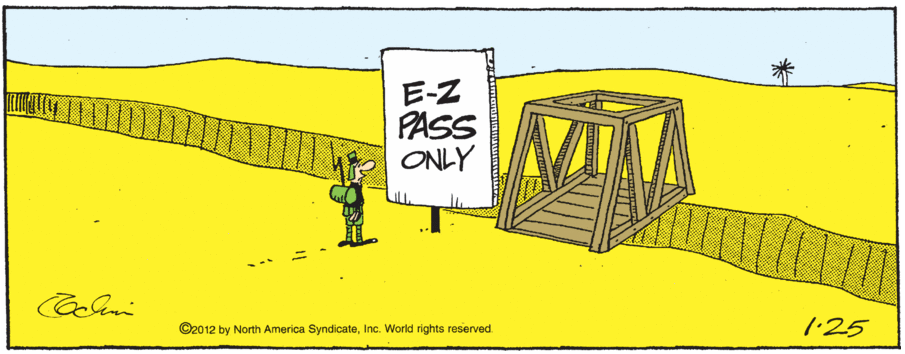
E-Z Pass Only
Improved Car Seat Belt 40% Less Accidents

NHAI's First ETC(Electronic Toll Collection) PLAZA
- ETC based on Microwave Technology(CEN 278) implemented at Delhi - Gurgaon Super Connectivity
Technology by: -Kapsch Metro JV.
News Categories
- NHAI (332)
- Highway (233)
- BOT (231)
- Projects (207)
- Default (204)
- Road (182)
- About (175)
- Infrastructure (160)
- Tolling (108)
- Investment and Finance (102)
- Expressway (98)
- Construction (90)
- Smart City (87)
- NHDP (77)
- ITS (65)
- International (55)
- Delhi (53)
- Safety (53)
- Toll Plaza (51)
- Toll Management System (50)